HALO JEPARA- Reviving Jepara Port; World Trade Silk Road Volume II.
Jepara is one of the phenomenal maritime areas since thousands of years ago. In 322 BC, travelers from the City of Mourya Ashoka India; namely Ajisaka landed in Jepara.
Jepara became the anchorage of Ajisaka’s ship based on and indications of the existence of Mount Mahameru, the highest on the island of Java. After Ajisaka landed in Jepara, he changed the name of Mount Mahameru to Mourya, the Capital of the Ashoka Kingdom. He made it a gift presented to King Ashoka India. (C.W. Leadbeater; 1979)
As time went on, Jepara continued to develop. When led by Queen Shima with the Ho-ling or Kalingga Kingdom, Jepara became a transit point and trade route from abroad, even recorded as far as mainland China, the Middle East, Europe and India.
Even when led by Pate Unus, Queen Kalinyamat and the power of Islamic Mataram, Jepara became a large and busy trading area until finally around 1770 AD the Dutch colonialists moved the Jepara Harbor to Semarang.
After the Jepara Port was moved by the Dutch Colonizers to Semarang, Jepara accepted the bitter reality, because it became an “isolated” area even though it still had products that were in demand by foreign countries such as carving crafts, Troso woven cloth and others.
From the above conditions, a brilliant idea emerged from the new Regent of Jepara Witiarso Utomo (familiarly called Mas Wiwit) who wanted to open the “historical memory” of the greatness of the Jepara Port which became a transit and “silk road” for world trade.
Jepara Port; World Trade Silk Road
Starting from the notes of Fa Hien (412), a traveler from China who recorded the arrival of travelers and traders from the Aryan nation in 322 BC, namely Ajisaka to the Archipelago via Jepara Port who saw the highest and largest mountain in Java, namely Mount Mahameru. Ajikasa then changed its name to Mount Mourya.
Based on Chinese records, Mount Mourya is an active mountain. When it erupts, its spray can radiate to the Grobogan area – now called Bledug Kuwu -. In fact, because the spray is so high, sailors can see it. (C.W. Leadbester; 1979 & Rashad Herman; 2012).
Chinese travelers and traders noted that Jepara in the 5th century AD already had a large kingdom and advanced in trade with an international scale port, namely the Holing or Kalingga Kingdom led by Queen Shima. (Hamka; 2016).
Queen Shima opened a very wide maritime trade route, namely across countries and nations; both to China, India, Africa and even the Middle East through large and strong Port Ports.

In 1368 AD, during the Ming Dynasty, China sent professional workers/experts to the archipelago through large ports such as; Sambas, Palembang, Banten, Sunda Kelapa, Lasem, Tuban, Gresik, Surabaya and Jepara.
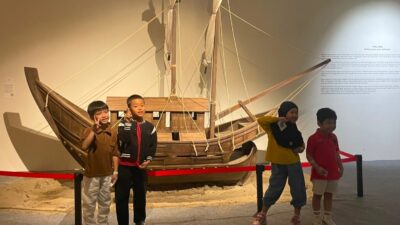
Especially for those Chinese who were experts in making Sailing Ships (Jung), carpentry and carving were passed down in Jepara. From here we know that the history of Carving in Jepara originated from China which was initiated by carpentry and carving experts sent by the Ming Dynasty in 1368 AD. (Rashad Herman; 2012).
Read More : Buy Vanilla Beans in Bulk Online Worldwide Shipping
In the 1500s AD, European travelers such as Tome Pires noted that there were two kingdoms in the Jepara region, namely the Tidunan Kingdom led by Pate Orob and the Jepara Kingdom led by Pate Unus who had a large port for transit and trade between countries.
In Tome Pires’ notes, Pate Unus was the brother-in-law of Pate Rodim, the King of the Demak Kingdom. Even the Demak Kingdom – because of its position in the interior – if it wanted to export its agricultural products such as rice, spices and others to foreign countries had to ask permission from the Jepara Kingdom through the Jepara Harbor.
So, Demak and Jepara at that time were two large kingdoms on the same level. Demak did not have a large port city.
Pate Unus was also recorded as having an advanced trade vision by establishing trade cooperation with other kingdoms and countries such as cooperation with Aceh, Sumatra, Palembang, Kalimantan, Malacca, Gujarat, the Middle East, China and others.
Therefore, when the Portuguese controlled Malacca, which was considered to disrupt Nusantara trade, Pate Unus attacked the Portuguese in Malacca twice, namely in 1513 AD and 1521 AD. (Tome Pires; 2018).
In the next phase, Jepara had a very rich, intelligent and strong female leader, namely Queen Kalinyamat. Diago de Couto, a Portuguese traveler, noted that the Jepara Kingdom was led by Queen Kalinyamat who had wealth, power and a large port city.
Jepara became one of the icons and gateways for very broad trade from Aceh, Sumatra, Java, Malacca and the eastern region of Hitu and even to foreign countries.
The Jepara Kingdom’s trade was not only in the sale of rice, spices but also expanded into craft products such as carvings, pottery, ceramics and others, so that Jepara became a center of world trade to be reckoned with, not only from within the country but also from abroad.
Therefore, the strong reason that was substantial and at the same time a brilliant and intelligent idea of Queen Kalinyamat when attacking the Portuguese in Malacca was to save the Silk Road of the Archipelago Trade from the European colonizers. At that time, colonialism did want to control the Archipelago Trade Route.
By Couto, Queen Kalinyamat was called; Rainha de Jepara, Senhora Paderosa e Rica (Queen of Jepara, a rich and powerful woman). From that too, it became the reason Queen Kalinyamat deserved to be crowned a National Hero. (Couto; 1558)
The Dutch colonialists – in 1780 AD – had a big role in the decline of Jepara, namely moving the Jepara Harbor to Semarang. After the Dutch colonialists moved the Jepara Harbor to Semarang, Jepara was no longer an independent icon of world trade.
The derivative impact of Jepara became a “marginalized and isolated” city, although Jepara’s craft products, especially carved furniture, are still world-famous. (M.C. Ricklefs; 2008).
Welcoming the Idea of Reviving Jepara Port City
From the explanation above, if we follow Mc. Luhan’s opinion about “Global Village”, then historically, Jepara is a global city. Jepara’s globality has strong historical roots through a great monument, namely the ownership of Jepara Port City which is world-famous.
The idea of Jepara Regent Mas Wiwit about reviving and rebuilding Jepara Port City must be supported together as an effort to continue and open Jepara’s trade route to re-penetrate the Silk Road Trade Route that once existed in Jepara. The question is; Is this possible? The answer is very possible.
In this era of a world that has “folded and folded”, Jepara needs a new breakthrough to facilitate the flow and process of independent and competitive trade to penetrate the world market. Moreover, the strategic position of the Jepara sea which is the traffic of large ships will be the basic capital to revive and rebuild Jepara Port City.
The span of the Aceh, Sumatra, Bangka Belitung, Kalimantan, Sulawesi, Surabaya, Bawean, Bali trade routes and even overseas trade routes through Jepara will be very strategic. If the Jepara Port has been built, it could threaten the existence of the Semarang Port (Tanjung Emas Port) which is currently very vulnerable to “rob floods” from the sea.
If the Semarang – Demak – Jepara Toll Road can be realized, it is possible that Central Java’s import and export trade will shift to Jepara Port. Moreover, there is a guarantee of security, comfort and convenience in sending and receiving export and import products through Jepara Port.
Jepara has a strong basic capital, both historical and infrastructure, large and adequate land to revive and rebuild Jepara Port. There is only one word and belief left to realize it, namely MOVING TOGETHER, WE CAN.
*Hisyam Zamroni, History Enthusiast, Deputy Chairperson of PCNU Jepara